

Last week, one of our Driver Trained Occupational Therapists, Amanda, experienced what could only be described as the two extremes of driving and vehicle modification practice.
Her first learner driver stood around seven feet tall.
Her second learner driver, who has dwarfism, was around four feet tall.
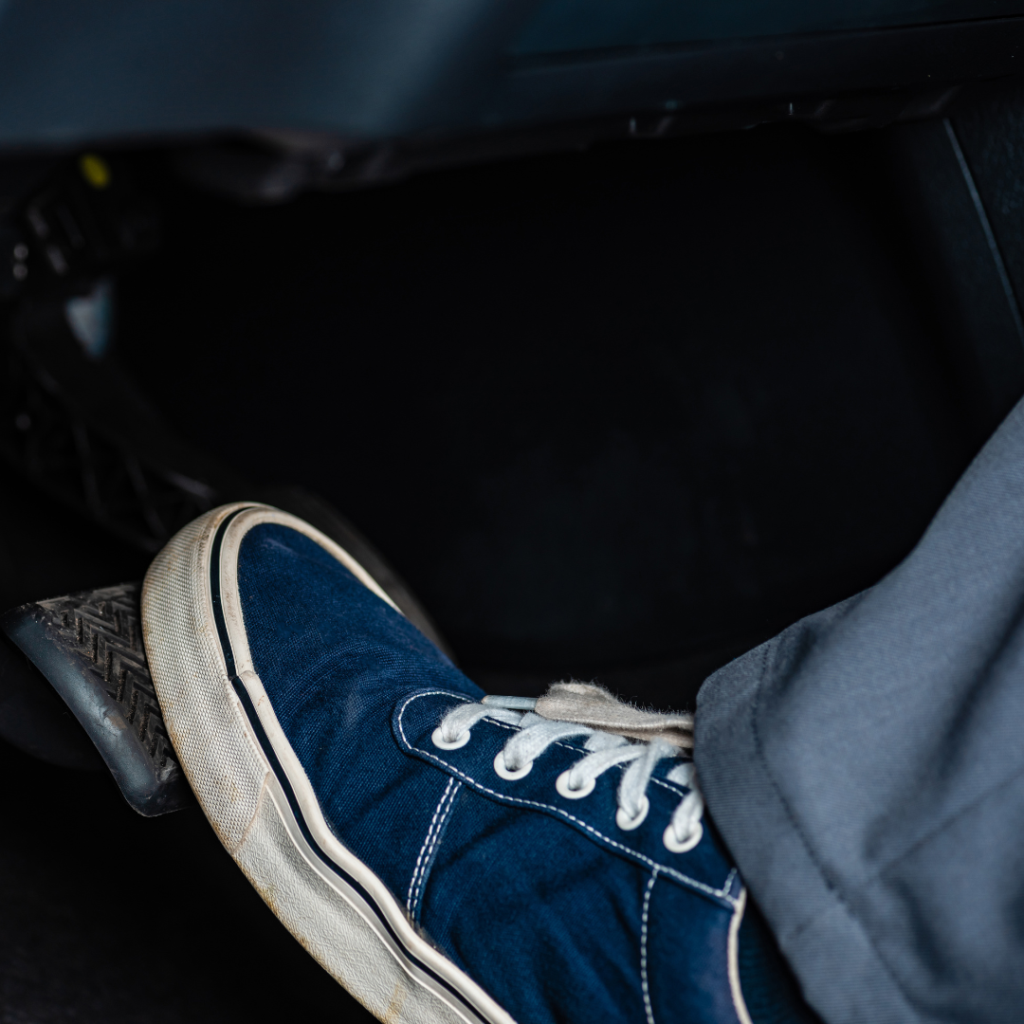
Two clients. Two very different bodies. One shared goal: to drive safely and independently.
While these cases sat at opposite ends of the height spectrum, they highlighted exactly the same principle: there is no such thing as a standard driver. Every vehicle, every modification and every driving pathway must be tailored to the individual.
It’s also why we’re so passionate about sharing our knowledge through our Driving & Vehicle Modifications Conference. These are the kinds of real-world clinical challenges that simply aren’t covered in textbooks.
The seven-foot learner
Our first client is a young man with autism who is learning to drive with specialised supports. Like many neurodivergent learner drivers, he requires a Driver Trained Occupational Therapist and a specialised driving instructor to build his skills safely. But this case presented a challenge we’d never encountered before.
He simply didn’t fit into any of the specialised driving instructor vehicles. We tried.
When he turned 18, his mum purchased him a Toyota Camry, expecting it would become his learner vehicle. The problem was… he kept growing. By the time he was ready to commence lessons, even his own car no longer provided a safe driving position. His knees were cramped, his head was close to the roof lining, and his eye line sat so high that his ability to see traffic signals and the road environment ahead was compromised.
At Alternate Mobility, we explored whether relocating the driver’s seat in the Camry would create enough additional space. While technically possible, it quickly became clear that it wasn’t going to provide a long-term solution Instead, after trialling multiple vehicles, the best option proved to be a Kia Tasman. Its generous cabin space, improved head clearance and more upright windscreen dramatically improved his seating position and visibility. A small modification to relocate the driver’s seat further rearward will provide the final adjustment, allowing him to sit comfortably without his knees almost touching his ears
But choosing the right vehicle was only half the solution Because he is still learning to drive, he needs to undertake lessons with a specialised driving instructor using dual controls. With no suitable instructor vehicle available, our plan is to install dual controls into the family’s Kia Tasman so lessons can commence in his own vehicle. Once he has developed the skills and confidence to progress to supervised practice with his parents, the dual controls can simply be removed.
It’s a creative solution—but one that required occupational therapy, vehicle modification expertise and close collaboration between the family, driving instructor and vehicle modifier.
The four-foot learner
Just hours later, Amanda was working with another learner driver whose challenges were almost the complete opposite.
This young man has dwarfism and is learning to drive in a Kia Picanto. Rather than needing more space, every aspect of the vehicle needed to be brought closer to him. Extension pedals formed part of the solution, but they were only the beginning.
To achieve a safe driving position, we recommended modifications to raise the driver’s seat, provide customised back support and optimise his posture so he could comfortably see over the steering wheel and access all of the vehicle controls.
Independence doesn’t stop once the engine is turned off, either. Because he couldn’t reach to close the rear hatch independently, an electric tailgate will allow him to manage the vehicle without assistance. Looking ahead, he is also scheduled to undergo spinal surgery later this year. Anticipating the possibility of reduced neck movement, we are recommending panoramic and fisheye mirrors to maximise his field of view and future-proof the vehicle as his needs change.
Again, every recommendation was tailored to the individual—not simply the diagnosis.
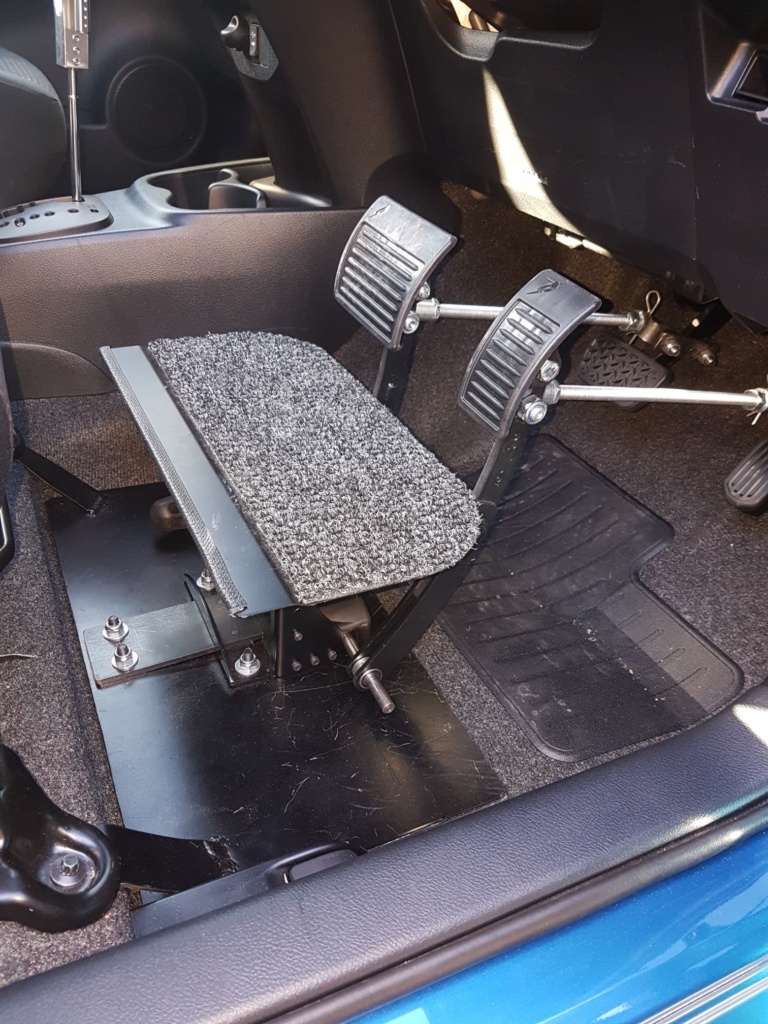
The clinical reasoning behind every recommendation. People often assume vehicle modifications are simply about fitting hand controls or extension pedals. In reality, that is only a small part of the process.
As occupational therapists, we consider every aspect of the interaction between the driver and the vehicle, including:
- Safe transfers into and out of the vehicle.
- Seating posture, comfort and fatigue.
- Eye position and visibility through the windscreen.
- Access to primary and secondary controls.
- Blind spots created by mirrors and vehicle design.
- Functional tasks such as opening and closing the boot independently.
- How a person’s needs may change over time.
Sometimes moving a seat by only a few centimetres can completely change what a driver is able to see. Sometimes choosing the wrong vehicle means no amount of modification can create a safe outcome.
That’s why our advice is always the same:
Don’t buy the car first. Get the occupational therapy assessment first.
Why we’re sharing these stories
Cases like these are uncommon.
Most occupational therapists—and even many driver-trained OTs—may only encounter a handful of clients with such significant height differences throughout their careers.
At Driving Well Occupational Therapy, however, driving and vehicle modifications are all we do.
Over the past decade, our team has completed more than 3,000 driving assessments and supported almost 200 vehicle modification applications. That level of exposure means we’ve worked with an extraordinary variety of clients, conditions and challenges. Every complex case expands our knowledge and strengthens our clinical reasoning.
That’s exactly why we’re hosting the Driving & Vehicle Modifications Conference this September.
This conference isn’t about sitting through sales presentations or learning theory in isolation. It’s about sharing the practical knowledge that comes from years of specialised clinical practice. You’ll work through real case studies like these, inspect modified vehicles, hear directly from occupational therapists, engineers and vehicle modifiers, and build the confidence to make better clinical decisions for your own clients.
Whether your next client is four feet tall, seven feet tall—or somewhere in between—you’ll leave with practical strategies you can immediately apply in practice.
After more than 3,000 assessments, we’ve genuinely seen the long and the short of it.
Come and learn with us.
Driving & Vehicle Modifications Conference
📅 16–17 September 2026 | Brisbane
🎟️ Register here: National Vehicle Mods & Driving Solutions Conference