

One of the things I love most about working in driving and vehicle modifications is that no two clients are the same.
Sometimes people assume that the hardest part is working out the driving controls. Often… it’s not.
I’m working with a lovely gentleman at the moment who has cerebral palsy and has been driving independently for more than 30 years using a left-sided mechanical push/pull hand control. Unfortunately, that product is no longer available.
So, we’ve completed his driving assessment and trialled the Fadiel Easy Drive hand controls Easy Drive – Total Ability Australia and New Zealand, and with a few lessons I’m confident this will be a great solution for him.
Driving controls are sorted – but that was the easy part.
The real challenge is everything else.
At the moment, Matt transfers into the driver’s seat, walks around to the rear of the vehicle, lifts his manual wheelchair into the boot, then makes his way back to the driver’s door holding onto the vehicle.
It’s becoming increasingly difficult, carries a significant falls risk, and simply isn’t going to be sustainable over the next 5–10 years.
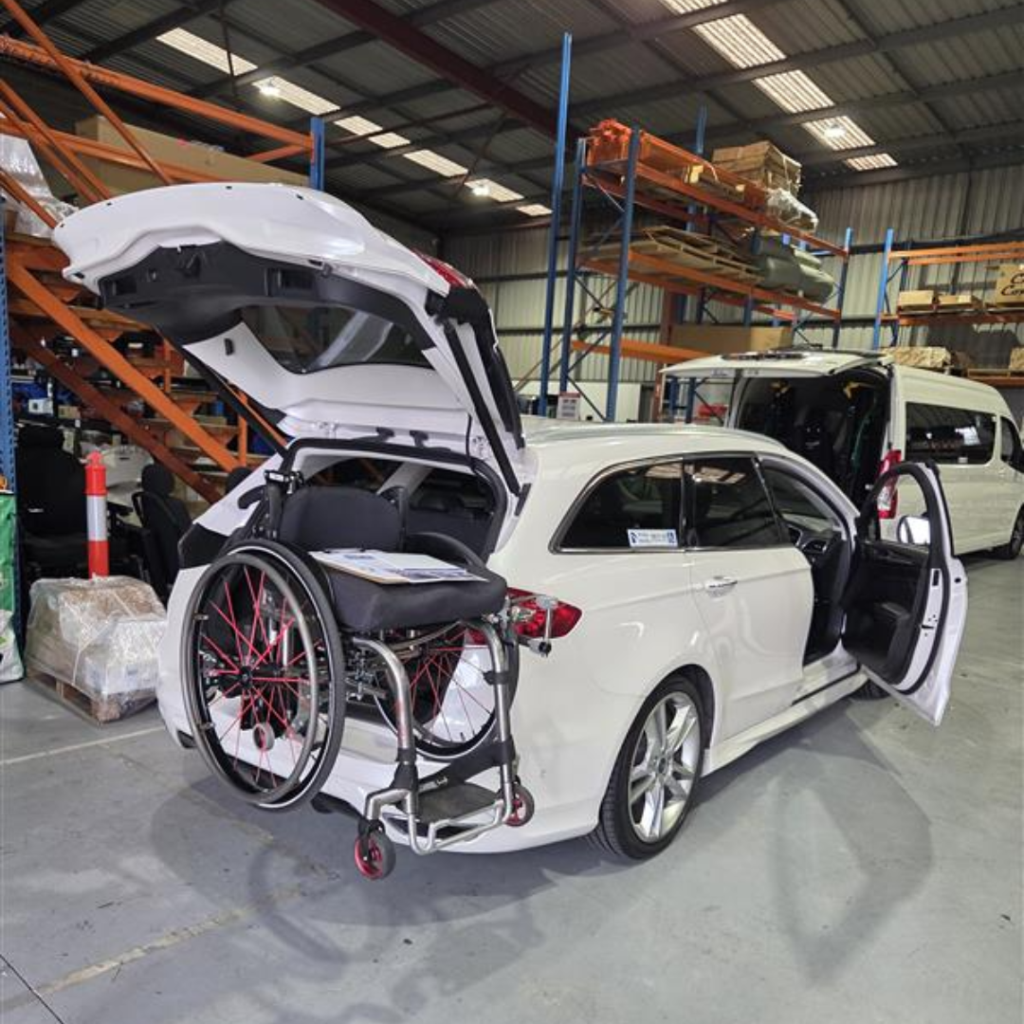
Our hope was that an Abiloader Abiloader International | Abiliquip would be the answer – this kicked off a surprisingly complex assessment process.
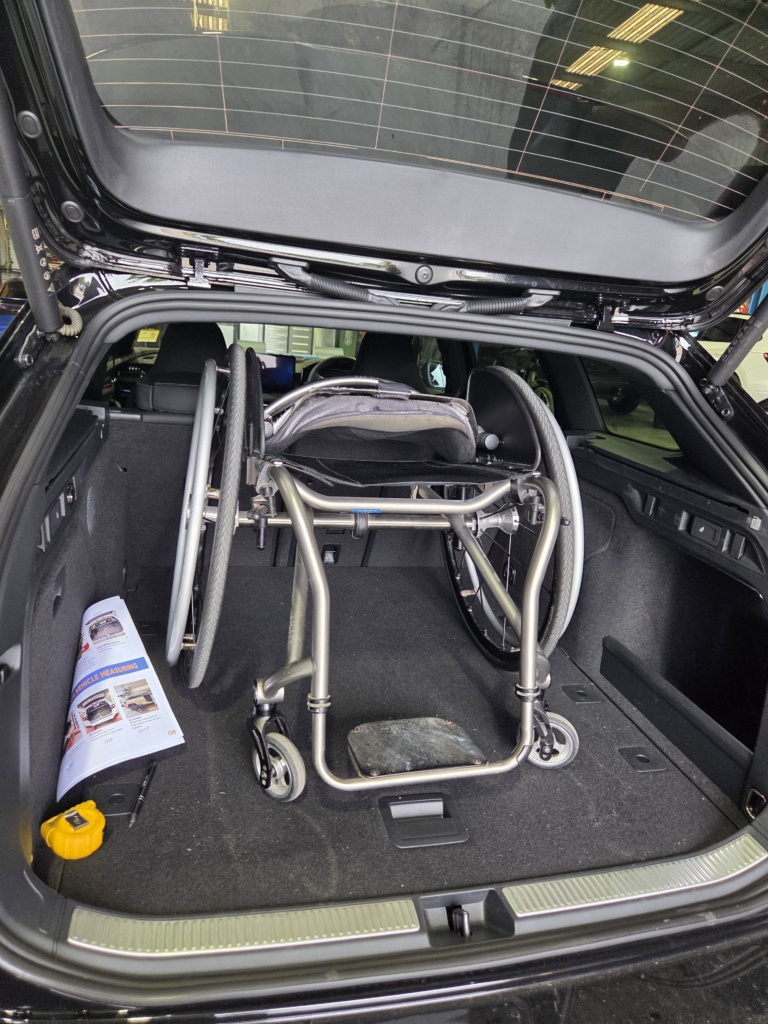
We needed to confirm compatibility between Matt’s wheelchair and the loader, source a suitable vehicle to trial – Matt’s research pointed him towards a Skoda Superb (thank you to the dealership for lending us one), involve the vehicle modifier and equipment supplier onsite, and even trial changing the camber of his wheelchair to see whether we could gain enough clearance, making sure his wheelchair/seating OT was kept happy in the process. Preserving shoulder function for long term mobility was also crucial, and of course, I didn’t want him tipping the wheelchair over if we changed the camber.
Despite all that, it still looks like the wheelchair is simply too wide to swing around the back of this type of car in towards the boot, and also clear the boot opening. So, it’s back to the drawing board.
Next steps are likely to include exploring alternative vehicles with different boot dimensions, while keeping a very close eye on driver’s seat height and transfer ability. There’s no point finding a vehicle with the perfect boot if it’s too high for Matt to transfer safely.
This is a great case demonstrating my, Brad Williams and Chris Pearce – OT Services Group‘s presentation at OTX – that driver rehab is everyone’s role.
For Matt, we’ve needed OTDA, driving instructor, funder, support coordinator, wheelchair OT, local vehicle modifiers (yes, plural), international AT supplier, and car dealership.
This is the part of vehicle modification practice that I find both fascinating and incredibly rewarding – it’s about finding the solution that balances driving, transfers, wheelchair stowage, future needs, safety and long-term independence.
I’d be interested to hear from others working in this space.
Has anyone solved a similar challenge? Are there vehicles or approaches you’d be looking at next?
One of the reasons we’ve developed the Driving Well OT National Vehicle Modifications & Driving Solutions Conference is because these are exactly the kinds of real-world cases we’ll be working through together. Not textbook examples where everything fits neatly, but the complex clinical reasoning that sits behind good vehicle modification practice.
This case is still unfolding, and that’s the reality of vehicle modification practice. Sometimes the first idea works. Sometimes it doesn’t. The challenge—and the privilege—is working alongside the client and the team until you find the right solution.
If you’d like to develop your confidence in this space, I’d love you to join us at the Driving Well OT National Vehicle Modifications & Driving Solutions Conference.
Come and learn from almost 10 years of clinical practice, real cases, practical problem-solving, and collaboration with some of Australia’s leading vehicle modifiers and industry partners.
With Early Bird registrations closing on 17 July, now is the perfect time to secure your place. I hope to see you in Brisbane.